
 +998 71 264 84 94
  5, Buyuk Kelazhak st, Mirzo-Ulugbek district,
Attention. Competition announced
 24.03.2026
  842
842 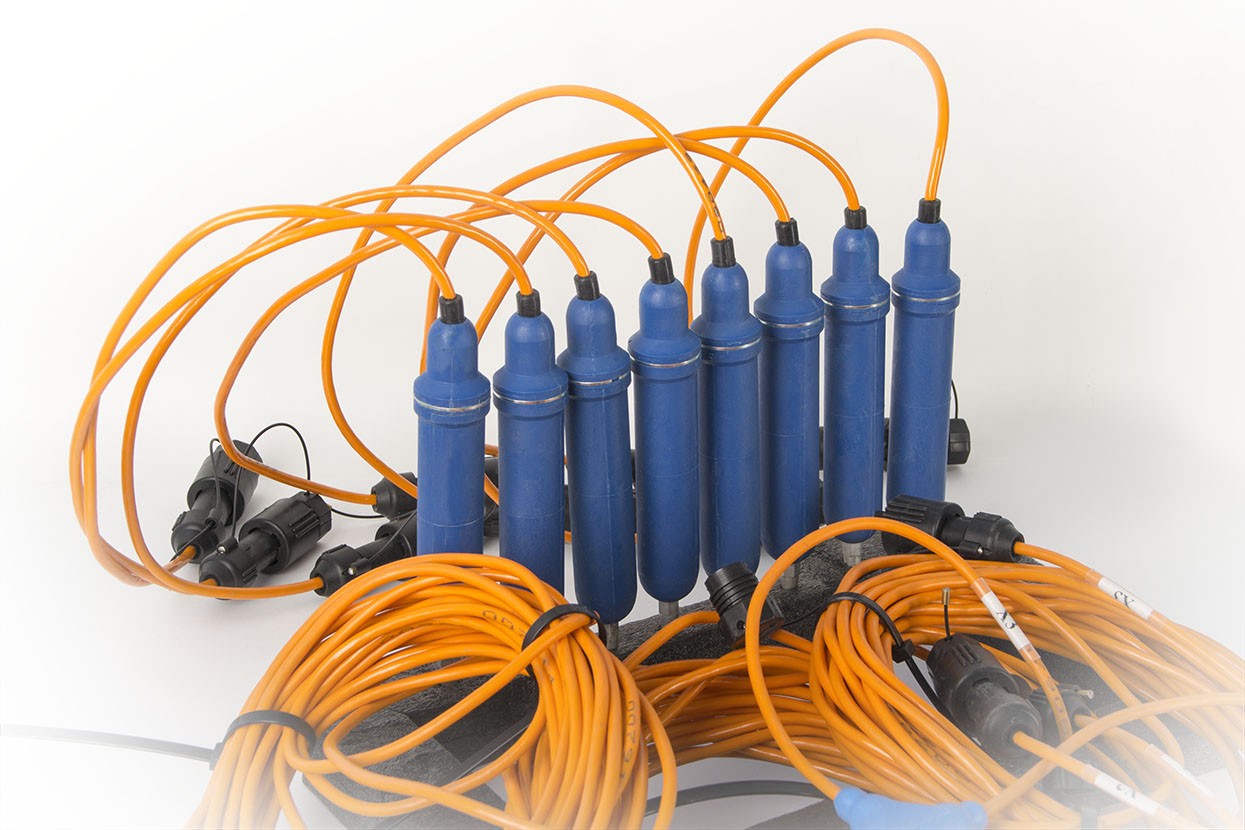
|
№ |
Name of goods and services |
number |
|
1 |
"Seismic exploration complex for 20,000 channels" in the amount of 2 sets |
According to the technical assignment |
- Purpose of Acquisition
Technical and technological upgrades and modernization of equipment used to record seismic waves during seismic exploration for oil and gas deposits.
- Project Implementation Basiс
The purchase is being made as part of the modernization and strengthening of the material and technical base of Uzbekgeofizika JSC.
Source of Funds:
- Purpose
The 20,000-channel seismic exploration complex, consisting of a nodal (wireless) recording system with 20,000 active channels, 12 seismic vibrators and auxiliary equipment, is designed for field seismic exploration work using seismic vibrators, both independently and integrated with existing recording systems MOGT-3D INOVA G3i and Sercel 428XL. The equipment will be used to solve three main problems:1. Searching for oil and gas deposits and their delineation.2. Estimating hydrocarbon reserves.3. Studying reservoir dynamics during development (e.g., monitoring gas-oil and oil-water interfaces). These problems are solved using the recording, computer processing, and interpretation of multidimensional wave and time fields.
- Main Technical Requirements
The seismic exploration system must simultaneously record at least 20,000 active channels, support operation with 12 seismic vibrators in single and group modes (flip-flop, fleet, slip-sweep), and have a scalable architecture without loss of synchronization or data quality. A service life of at least 7 years. The contractor must provide the necessary spare parts and wear parts necessary for the smooth operation of the system during the warranty period (within the allocated budget).
5. Equipment requirements The 20,000-channel seismic exploration complex includes recording equipment, elastic wave excitation equipment, surveying equipment, and a planning and field processing system. The recording equipment consists of a seismic station and field equipment. The field equipment, or nodes, are used to receive, amplify, filter, digitize, and store seismic data. The seismic station records auxiliary information and monitors the condition of the field equipment. The elastic wave excitation equipment includes seismic vibratorswith a minimum force of 275 kN and a synchronization system supporting high-performance seismic exploration. The surveying equipment includes equipment compatible with GPS, GLONASS, and other satellite systems. It is used to record the coordinates and elevations of receiving and excitation points. The planning and field processing system is designed to support the development of fieldwork methods, quality control of primary seismic data, and rapid pre-processing of 3D seismic data.
|
№ |
Name
|
Quantity |
|
1 |
2
|
3 |
|
|
Seismic exploration complex with 20,000 channels
|
2 sets |
|
1 |
Recording equipment
|
|
|
1.1 |
A seismic recording nodal system (nodal system) for digital recording, accumulation, correlation, visualization and storage of seismic data, with the mandatory presence of peripheral devices that ensure the full functionality of the nodal system.
The license for the software, which includes the full functionality of the nodal system, is perpetual
|
at least 1 set |
|
1.2 |
Field recording modules, nodes, with outputs for connecting groups of seismic receivers, for the ability to work with both their own sensor and with an external group of seismic receivers
|
at least 20,000 recording channels |
|
1.3 |
Equipment for charging nodes and downloading seismic data, the quantity must correspond to the architecture of the proposed system, prompt charging of a sufficient number of nodes to ensure continuous data recording in the field
|
at least 1 set |
|
1.4 |
Field Data Warehouse
|
at least 1 Pb |
|
1.5 |
A set of hand-held seismic network testers for field equipment monitoring
|
at least 4 set |
|
1.6 |
Equipment for repair with replaceable elements, boards and parts to ensure continuous operation of the nodal system, in the amount of 5% of the cost of the main equipment (clause 1.2) in a complete set as agreed with the customer
|
at least 1 set |
|
1.7 |
A diesel generator set with a capacity of at least 16 kW on a trailer, with replaceable parts and spare parts worth 5% of the cost of each diesel generator set
|
at least 3 units |
|
1.8 |
A diesel generator set with a capacity of at least 100 kW for technological purposes, with replaceable parts and spare parts worth 5% of the cost of the diesel generator set.
|
at least 1 units |
|
1.9 |
VHF radio stations (VHF range) digital mobile (car) with a power of |
at least than 50 sets |
|
1.10 |
VHF (VHF range) digital hand-held radio stations with a power of at least 5 W
|
at least than 30 sets |
|
2 |
A system for planning, field control and processing of geophysical data, including:
|
|
|
1 |
2
|
3 |
|
2.1 |
Hardware and software complex for planning surveillance and positioning control systems |
at least 1 set |
|
2.2 |
Hardware and software complex for standard processing of seismic data |
at least 1 set |
|
3 |
Satellite topographic and geodetic georeferencing equipment with high-precision coordinate and elevation determination – differential DGPS with a data processing and work planning device, calculating coordinates and elevations with storing the processed template in memory, including:
|
|
|
3.1 |
Base station
|
at least 2 sets |
|
3.2 |
Rover
|
at least 14 sets |
|
3.3 |
Total station
|
at least 4 sets |
|
3.4 |
Base station repeater
|
at least 2 sets |
|
3.5 |
Software for processing topographic and geodetic data, perpetual license
|
at least 1 |
|
3.6 |
Spare parts for topographic and geodetic equipment
|
at least 1 set |
|
4 |
Synchronization system for controlling vibrators with GPS positioning equipment, including: |
|
|
4.1 |
The vibration source control unit, the encoder, complete with power cords, communication cables, and other accessories necessary for full operation
|
at least 2 sets |
|
4.2 |
The vibration source control unit, decoder complete with power cords, communication cables, and other accessories necessary for full operation
|
at least 14 sets |
|
4.3 |
A notebook computer (at least 15”, SSD 512Gb) with software for managing and monitoring the operation of the synchronization system and seismic vibrators, entering setup parameters, and monitoring the radiation characteristics of the probing signal from seismic vibrators. |
at least 2 sets |
|
4.4 |
Vibrator simulator for testing and repairing synchronization system units (vibrator simulator type VS-10 or similar) |
at least 2 sets |
|
4.5 |
VHF (VHF range) digital mobile (automotive) radio stations with a power of 20-50 W for vibration source control units |
at least 16 sets |
|
5 |
Seismic vibrators, each equipped with:
- rollover prevention system;
- winch with a minimum capacity of 13.5 tons;
- vibration exciter night lighting kit;
- additional sun protection roof.
|
at least 12 sets |
|
5.1 |
Vibrator testing kit (like the Bird Dog 4 Vib QC System or similar)
|
at least 2 sets |
|
5.2 |
Vibrator Wire Test Kit
|
at least 2 sets |
|
5.3 |
Mechanic's cabin - a mechanical workshop for repairing vibrators
|
at least 1 set |
|
5.4 |
Equipment and tools for servicing and repairing seismic vibrators with replaceable parts, spare parts, and other components worth 5% of the cost of the vibrators (p. 5)
|
at least 1 set |
|
5.5 |
Basic technological materials amounting to 5% of the cost of vibrators (p. 5)
|
at least 1 set |
|
6 |
Provision of technical descriptions and operating and repair instructions, as well as user software in English and Russian for each type of equipment supplied
|
at least 2 sets |
|
7 |
Training of at least 3 Customer specialists for each type of supplied equipment (clauses 1.1, 1.2, 1.6, 2, 3, 4, 5) in accordance with the standard course of the manufacturer in the Supplier’s training centers
|
at least 1 set |
|
8 |
Technical support of the work by the Contractor at the Customer's place for 6 months
|
at least 1 set |
* - the configuration shown is for one "Seismic Survey System with 20,000 Channels"
The Contractor must provide a technical proposal specifying the name, make, and model of each item of the proposed equipment.
All licenses required for operation of the system must be perpetual.
The Contractor must provide a fully equipped and functional "Nodal (Wireless) Recording System with 20,000 Active Channels and 12 Seismic Vibrators." If necessary, the Contractor may offer additional modules, products, and services not considered by the Customer for any reason, but required to ensure full use of the requested configuration in accordance with the manufacturer's technical documentation (within the allocated budget).
- Main technical characteristics
6.1 Central Electronics
- Standard central system configuration.
- Capable of working with explosive and non-explosive (vibration) signal sources, including high-performance methods such as Flip Flop, Slip-Sweep, HDSSSS, HVPS, and others.
- Preliminary testing – verification of all characteristics of field recording modules.
- Data download and battery charging for field modules.
- Processing of vibroseismic (correlation) and pulsed signals.
- Storage capacity for correlated seismic data: at least 1 Pb.
6.2 Recording Equipment (Field Recording Module - NOD)
- Number of recording components: at least 1 (vertical), one channel per module
- Lower data recording threshold: 5 Hz
- Memory battery life: at least 24 days with a 2 ms sampling rate
- Battery type: Li-ion, rechargeable
- Battery life: at least 24 days with 24-hour recording
- analog-to-digital conversion: at least 24 bits
- Instrumental testing for background noise, resistance, magnitude, etc.
- Sampling rate: 4, 2, 1 ms
- Time standard: synchronous with GPS
- Instantaneous dynamic range: at least 125 dB
- System dynamic range: at least 140 dB
- Equivalent input noise (RMS): no more than 1.5 μV (at 0 gain) dB)
- Maximum input signal (RMS): no more than 3.6 V (at 0 dB gain)
- Phase accuracy: up to 20 µs
- High-pass filter (linear and min. phase): at least 0.8 F N/A
- Low-pass filter: selective
- Dust and water protection standard of at least IP68
6.3 Test Equipment
- Performing the following tests:
- Hardware tests (self-noise, distortion, impulse, phase accuracy, amplitude accuracy, etc.);
- Field tests (slope, noise, etc.).
6.4 Equipment for satellite topographic and geodetic reference on the ground with high accuracy of determining coordinates and heights
|
Number of channels, not less than |
• at least 555 channels;
• the ability to conduct accelerated measurements in challenging conditions;
• the ability to continue surveying with reduced accuracy during temporary loss of radio signal from the base;
• an improved GNSS processor.
|
|
Key Features |
Signal reception:
- GPS: L1C, L1C/A, L2C, L2E, L5
–– GLONASS: L1C/A, L1P, L2C/A, L2P, L3
–– Galileo: E1, E5a, E5b, Alt-BOC, E6
–– BeiDou: B1, B2, B3
–– QZSS: L1CA, L1C, L2C,L2, L5, LEX
- SBAS (WAAS, EGNOS, GAGAN, MSAS), L1C/A, L5 |
|
External Antenna |
GPS: L1, L2, L2C, L5 (standard)
–– GLONASS: L1, L2 (standard)
–– Galileo: E1, E5a, E5b, Alt-BOC, E6
–– BeiDou: B1, B2, B3
–– QZSS, SBAS (WAAS, EGNOS, GAGAN, MSAS), L-band
|
|
GNSS Measurements |
Independent code and phase measurements for all frequencies
• GPS: full cycle carrier phase, code (C/A, P, C code)
• GLONASS: full cycle carrier phase, code (C/A, P code)
- availability of differential corrections from satellite for real-time operation with a 3 cm horizontal accuracy
|
|
Memory card GB, not less |
Built-in SD (Secure Digital) 1 GB memory card
|
|
Purpose |
Development of geodetic networks with centimeter accuracy (baseline length is unlimited); execution of large-scale topographic surveys with centimeter accuracy; project placement with centimeter accuracy in the local coordinate system
|
|
Impact resistance |
Withstands a drop of at least 1.0 m onto a hard surface
|
|
Water resistance |
IP68, immersion under water 3m
|
|
Continuous operating time on one battery |
At least 8 hours
|
|
Operating temperature range |
from –40 °C to +65 °C
|
|
Accuracy |
Accuracy no worse than:
Autonomous (RMS) Horizontal: 1.0 m. Vertical: 2.0 m
DGPS (RMS) Horizontal: 0.2 m. Vertical: 0.4 m
RTK (RMS) Horizontal: ±(4 mm + 0.5 ppm)
Vertical: ±(8 mm + 0.5 ppm)
Signal acquisition (RMS) 20 ns
Static (RMS) Horizontal: ±(2.5 mm + 0.3 ppm)
Vertical: ±(5 mm + 0.5 ppm)
Speed (RMS) 0.03 m/s
|
|
Communication and data recording |
• Radio modem: built-in, sealed wideband receiver/transmitter with a frequency range of 403 MHz to 470 MHz; transmit power: no more than 0.5 W-2 W;
• CMR, RTCM 2.X, RTCM 3.X input and output
• NMEA 0183 output, built-in radio and GSM antenna. Memory: built-in, at least 1 GB.
|
|
Method of receiving RTK data |
Radio modem
|
|
Radio modem frequency range |
403-473 MHz (radio modem range of at least 5 km)
|
|
Initialization time |
up to 8 seconds
|
|
initialization reliability |
not less than 99.9%
|
|
Interface |
Type-C, Wi-Fi, Bluetooth, LTE FDD: B1/B3/B5/B8 LTE TDD: B38/B39/B40/B41 GSM: 900/1800MHz
|
|
Technical specifications for the field controller for the Rover GNSS receiver
|
|
|
Processor frequency, minimum |
2 GHz
|
|
RAM, minimum |
3 GB
|
|
ROM, minimum |
32 GB
|
|
Memory card, minimum |
built-in SD (Secure Digital) memory card up to 256 GB
|
|
Power |
7700mAh (Support fast charging) Working time: 15 hours Charging time: ≤4 hours
|
|
Screen |
at least 5” (127mm) 800-480 pixels, sunlight-readable color TFT with LED backlight
|
|
Keyboard |
Alphanumeric keyboard with programmable keys and backlight
|
|
Temperature range |
Operating temperature from -35 °C to +65 °C
|
|
Dust and moisture protection |
Protection not lower than IP67, Operating humidity 5%~100%
|
|
Data transfer |
GNSS: GPS+BDS+GLONASS
WIFI: IEEE 802.11 a/b/g/n/ac 2.4G/5G
Сеть: FDD -LTE B1/B3/B5/B7/B8 TDD -LTE B38/B39/B40/B41 WCDMA B1/B2/B5/B8 GSM B2/B3/B5/B8
Bluetooth: BT5.0 (BLE)
Type-C (OTG support)
|
|
Shock resistance |
Impact resistance - from a height of 1 m.
|
|
Application programs installed on the controller |
Manage your work, data, and coordinate system. Import and export data. View the full map when managing data and using applications. Real-time graphical display of results. Select points from the map. Interface languages - Russian, English, and other languages. Automatic point recording with quality control. Various methods, including time and distance tracking. Stakeout by points and from a digital elevation model. Navigate to a point using various methods. Quality control.
|
6.5 Synchronization System (Section 4, Section 5):
- Frequency range: 1–250 Hz with a step size of no more than 1 Hz;
- Sweep signal length: from 0 to at least 64 s with a step size of no more than 1 s;
- Number of sweep signals at least 16; in the library:
- Maximum number of vibrators: at least 32;
- Various sweep signal types: linear, nonlinear, user-defined, etc.;
- Trigger accuracy: no more than ±20 μs, or ±1 μs using GPS time;
- Time synchronization: analog signal or GPS time
6.6 Seismic Vibrators
- Peak force: not less than 275 kN
- Frequency range: 1 ÷ 250 Hz
- Starting output frequency: not more than 6.0 Hz at full power:
- Reactive mass-to-mass ratio: not less than 2.4 of the base plate:
- Base plate clearance: not less than 45 cm
- Base plate area: not more than 2.65 m2
- Piston stroke: not less than 3.85 inches
- Vibration isolation: of the air mount
- Frame type: articulated
- Axle drive: hydraulic, all-wheel drive
- Winch capacity: not less than 13,500 kg
- Diesel engine: 4-stroke, with water cooling
- Engine power: not less than 400 hp at 2000 rpm
- Air filtration: at least two-stage with pre-cleaning
- Emission standards: at least US Tier 3/EU Stage 3A
- Climb angle: at least 60% (31°)
- Length: no more than 10.7 m
- Width: no more than 3.5 m
- Height: no more than 3.7 m
- Total weight: no more than 34,000 kg
The equipment must be free from third-party rights and not require additional operating costs (license, software, etc.) throughout its entire service life for standard operation.
- Maintenance and Operation Requirements
Field equipment must remain operational at ambient temperatures ranging from –40°C to +60°C, subject to compliance with internal and/or other international standards in force in the Republic of Uzbekistan.
Maintenance and operation are carried out by the Customer, with all necessary support (consultations, technical support, spare parts, etc.) provided by the Contractor.
- Operating Cost Requirements
The Contractor must provide information on operating costs for the "20,000-Channel Seismic Survey Complex," including during the post-warranty period. The Contractor must supply energy-efficient equipment.
Additional Requirements:
- Commissioning work is carried out by the Contractor with the direct participation of the Customer.
- Product Compliance with Regulatory Documents in the Field of Technical Regulation
Compliance with the requirements of international standards ISO 9001, confirmed by the relevant certificate, as well as with international standards applicable to this type of equipment.
The equipment must comply with current standards and regulations on fire, sanitary, and electrical safety, as well as electromagnetic compatibility, in accordance with the product nomenclature for which mandatory certification with documentary evidence is required by the legislation of the Republic of Uzbekistan.
- Destination and Insurance of Goods
Destination:
- for delivery by rail: Republic of Uzbekistan, Republic of Karakalpakstan, Khodjeyli railway station (code 737603), and/or Nukus (code 7396007) JSC Uzbekistan Temir Yollari;
- for delivery by road: Republic of Uzbekistan, Republic of Karakalpakstan, Nukus;
- for delivery by air: Republic of Uzbekistan, Republic of Karakalpakstan, Nukus airport and/or Tashkent airport.
DAP according to Incoterms 2020.
- Requirements for dimensions, packaging, and shipping of goods
Packaging must ensure the protection of the goods from environmental influences and mechanical impacts during storage, transportation, and loading/unloading.
Equipment markings must comply with the manufacturer's technical documentation and other international standards.
- Requirements for novelty
The goods must be new, i.e., not used, not discontinued and manufactured no earlier than 2026.
- Requirements for delivery conditions
Goods are delivered by air and/or rail and/or road, to the customs warehouses of the destinations specified in Section 10, under DAP terms (Incoterms 2020). The goods must be delivered within 240 calendar days from the date of opening of the letter of credit.
- Delivery and Acceptance Procedure
The integrity and completeness of the supplied equipment is verified during customs inspection at the destination. The Contractor has the right to be present and participate in customs inspection. Quantity acceptance—in accordance with the bill of lading, packing list, invoice, markings, and Contract Specifications—is determined by the Customer, who shall draw up the Goods Acceptance Certificate.
For the purpose of accepting the results of work (services), the Customer has the right to establish an Acceptance Committee in the prescribed manner. Along with the presentation of the goods (works, services) to the Acceptance Committee, the Contractor shall submit a set of documentation developed by the Contractor, a list and requirements for execution, and other governing documents in force in the Republic of Uzbekistan.
The Contractor will ship the goods with the following documents: a transport or consignment note issued in the name of the Customer indicating the destination, the name of the Customer, the invoice number and date, and the contract number and date; a commercial invoice; Packing list; Certificate of origin; Manufacturer's product quality certificate; Certificate of conformity (if the product is subject to mandatory certification); Equipment passport; Equipment operation and repair manual; Export customs declaration; Set of operating documentation (in English and/or Russian language(s)).
- Warranty Obligations
The warranty period for the product is at least 24 months from the date of commissioning.
The Contractor guarantees that the end date of support (including the life cycle) for the equipment will be reached no earlier than 5 years from the date of conclusion of the supply contract.
Equipment support includes the availability of service for all units and components of the software and hardware.
The Contractor guarantees that the end date for accepting orders, manufacturing, and delivery of individual boards and EOM (end of market for expansion) modules will be reached no earlier than 5 years from the date of conclusion of the hardware supply contract.
The Contractor guarantees the quality of the product in accordance with international and/or other similar standards.
In the event of a product failure or defect during the warranty period, the supplier is obligated to repair the defect or provide a suitable replacement at its own expense within 30 days.
Commercial offers should be sent to the Chairman of the Board of JSC "Uzbekgeofizika" R.A. Yusupzhonov by e-mail kancelyariya@uzbekgeofizika.uz, uzgeoinfo@mail.ru
Additional information by phone: 88 247 22 20. Duration of submission of commercial proposals is 7 calendar days from the date of publication.


